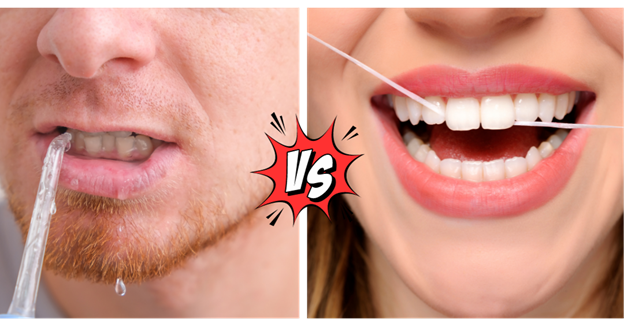
Achieving and maintaining optimal oral health is a journey worth embarking on. Central to this journey is the practice of flossing, a habit that promotes healthy gums and a radiant smile. However, the question that often arises is: Which tool should you choose for this essential task – traditional dental floss or the modern water flosser? In this detailed guide, we aim to shed light on these two oral hygiene companions, delving into their strengths and weaknesses to assist you in making a well-informed decision.
Deciphering the Essentials
Dental Floss vs. Water Flossers
Let’s embark on our journey by understanding the core characteristics of both dental floss and water flossers.
Traditional Dental Floss
The Pros and Cons of Dental Floss
Pros:
- Accessibility and affordability, making it readily available
- Effectiveness in removing plaque and food particles wedged between teeth
- Portability and convenience for on-the-go use
Cons:
- Requires manual dexterity for precise use
- May prove challenging for individuals with braces, tight tooth gaps, or limited mobility
- Limited reach when it comes to cleaning below the gumline
Water Flossers
Pros:
- Remarkable efficacy in dislodging debris from tight spaces between teeth and beneath the gumline
- Ideal for individuals with braces, dental implants, or orthodontic work
- User-friendliness suitable for all age groups, often featuring adjustable pressure settings for comfort
Cons:
- Initial investment tends to be higher than that of traditional floss
- Requires a power source or batteries, reducing portability compared to dental floss
The Battle for Effectiveness
In the realm of effectiveness, both dental floss and water flossers have their unique strengths. Traditional dental floss excels in its ability to remove plaque and dislodge food particles lodged between teeth. Conversely, water flossers shine when it comes to accessing those inaccessible nooks and crannies and flushing out debris hiding beneath the gumline. Your choice should align with your oral health needs and personal preferences.
Tailoring Your Decision
Selecting between dental floss and water flossers hinges on several key factors:
- Oral Health Requirements: If you have braces, dental implants, or intricate orthodontic work, a water flosser might prove more convenient.
- Dexterity: Consider your manual dexterity; if you face challenges, a water flosser’s ease of use could be your ideal solution.
- Budget: While dental floss is budget-friendly, water flossers offer added convenience at a slightly higher initial cost.
- Personal Preference: Ultimately, your choice should reflect what you find most comfortable and effective in your daily oral care routine.
In Conclusion
The dental floss vs. water flosser debate lacks a universal answer. Both these tools play crucial roles in oral hygiene. Some individuals even opt for a combined approach, harnessing the strengths of each tool.
Remember, the core principle of a healthy smile remains consistent: commit to regular oral care and keep up with routine dental check-ups. Consult your trusted dentist to determine which option aligns best with your unique oral health requirements. Whether you gravitate toward the timeless charm of dental floss or embrace the modern convenience of water flossers, the end goal remains unchanged – a radiant smile and gums you can proudly flaunt.